
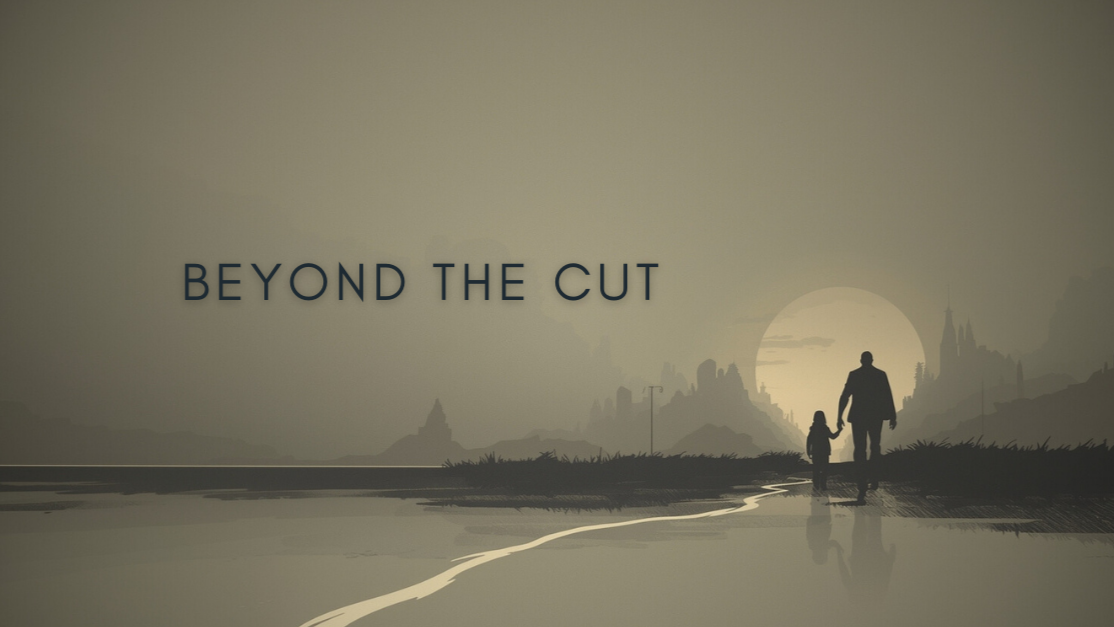
Storytelling in Games and Films That Never Break Perspective
In film, cuts are like punctuation. They separate ideas, change pace, and guide the audience’s focus. In games, their equivalents are loading screens, transitions between levels, or abrupt shifts in perspective. Cuts are familiar, they give us rhythm and they let us breathe.
But sometimes, storytellers decide to remove them entirely. No cuts. No interruptions. Just a single, unbroken perspective. And that’s when immersion takes on a whole new meaning.
Cinema’s Long-Take Experiments: Birdman & 1917
Alejandro González Iñárritu’s Birdman is one of the most famous examples. Shot to feel like a continuous take, the camera floats through backstage corridors and fragile egos without pause. That illusion of unbrokenness is aesthetic and mirrors the protagonist’s crumbling psyche and the claustrophobia of performance.
Sam Mendes’ 1917 applied the same device in a war film. By presenting the story as one uninterrupted journey, the audience never detaches from the soldier’s mission. Every breath, every stumble, every second of fear is experienced in real time. Cuts would have lessened the urgency.
Games Go Further: God of War
Games have always been about presence, but God of War (2018) took that presence to another level. The entire game plays out as one continuous shot. There are no cinematic interruptions, no perspective breaks. The player, Kratos, and Atreus are tethered together for every moment of their journey.
This design choice was stylistic but it also created intimacy. This lets Players watch and live the story. The absence of cuts meant no relief, no detachment, just raw continuity.
Television Joins In: Adolescence
What’s fascinating is that television has now joined this conversation. Netflix’s mini-series Adolescence tells its story entirely in long takes. Each episode unfolds in real time, following a 13-year-old boy through pivotal encounters that shape his coming of age.
Like Birdman and God of War, the decision not to cut is a stylistic flex as well as emotional. The lack of edits locks viewers into the boy’s perspective, making every awkward silence, every risky choice, and every fleeting moment of connection feel immediate and unfiltered.
The Psychology of Unbroken Perspective
Why does this work? Cuts normally provide breathing room. They reset attention and give us distance. Without them, tension builds differently:
- In film, the long take can feel suffocating, forcing us into a character’s skin.
- In games, unbroken perspective makes the journey feel relentless, binding us to our own actions.
- In television, real-time immersion keeps us vulnerable to every pause and shift, as if we are walking alongside the characters.
It’s about continuity and trust. The creator is saying: Stay with me. Don’t look away. Everything you need is in this flow.
Beyond Technique – A Shared Language
You may call uncut storytelling a trick or a gameplay innovation, but it is becoming a shared language across mediums. Films, games, and now shows like Adolescence are discovering that continuity itself can be narrative power.
The silences, the lingering glances, the moments of waiting, these become the new punctuation marks. Instead of edits, we get breaths. Instead of scene breaks, we get pauses that carry weight.
Why This Matters
In a time when attention is fragmented and stories are often consumed in clips and scrolls, there’s something daring about telling a story that never breaks. It demands focus, presence, and patience. And in return, it offers intimacy and immersion at a level no cut could ever provide.
To go beyond the cut is to let the audience live inside the story. And whether it’s a film, a game, or a streaming series, that’s a perspective shift worth paying attention to.