

Whether you’re an aspiring filmmaker, content creator, or marketing professional looking to elevate your video production, understanding the fundamental rules and techniques of filmmaking is crucial. These principles have been refined over more than a century of cinema and remain as relevant today as ever.
The Foundation: Basic Composition Rules
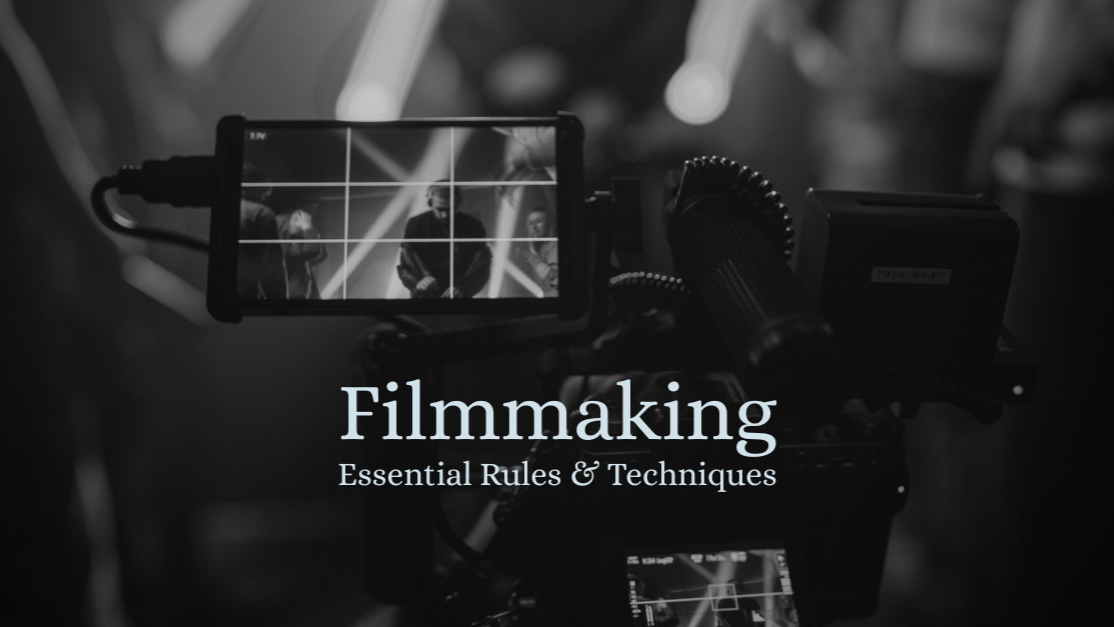
The Rule of Thirds – Perhaps the most fundamental principle in visual storytelling is the rule of thirds. Imagine dividing your frame into a 3×3 grid. Positioning your subject along these lines or at their intersections creates more dynamic, visually pleasing compositions than simply centering everything. This technique draws the viewer’s eye naturally and creates balance within the frame.
Leading Lines – Use natural or architectural lines in your environment to guide the viewer’s attention toward your subject. Roads, railways, hallways, or even shadows can serve as powerful compositional tools that add depth and direction to your shots.
Headroom and Looking Space – When filming people, maintain appropriate headroom (space above the subject’s head) and provide looking space in the direction they’re facing or moving. Too much headroom makes subjects feel lost in the frame, while too little creates an uncomfortable, cramped feeling.
Camera Movement: Purpose Over Flash
Every camera movement should serve the story. The key techniques include:
Static Shots – The most underrated tool in filmmaking. A locked-off camera forces the audience to focus on what’s happening within the frame, perfect for dialogue-heavy scenes or building tension.
Pan and Tilt – Horizontal and vertical camera rotations that reveal information or follow action. These should be smooth and motivated by something within the scene.
Dolly and Tracking Shots – Moving the entire camera through space creates an immersive experience, pulling viewers deeper into the scene or following characters through their environment.
Handheld – Adds energy, immediacy, and realism. Use it intentionally for action sequences or intimate moments, not because you forgot your tripod.
The 180-Degree Rule
This critical principle maintains spatial relationships and screen direction. Imagine a line drawn between two characters in conversation. Keep your camera on one side of this line throughout the scene. Crossing it disorients viewers and breaks the visual logic of the space. Break this rule only when you want to create deliberate disorientation.
Lighting: The Cinematographer’s Paintbrush
Three-Point Lighting remains the foundation of professional lighting:
- Key light (primary light source)
- Fill light (softens shadows)
- Back light (separates subject from background)
Understanding this basic setup allows you to then break it creatively for different moods and effects.
Natural vs. Motivated Lighting Even when using artificial lights, make them feel natural. Every light source should have a logical reason for existing within your scene, e.g. a window, lamp, fire, or streetlight.
The Power of Shot Variety
Professional filmmaking relies on diverse shot sizes:
- Establishing shots set the scene
- Wide shots show spatial relationships
- Medium shots are perfect for dialogue
- Close-ups capture emotion
- Extreme close-ups emphasize specific details
Varying your shots creates visual interest and controls pacing. A scene composed entirely of medium shots becomes monotonous, while too many quick cuts can feel exhausting.
The 30-Degree Rule
When cutting between shots of the same subject, move your camera at least 30 degrees to make the cut feel intentional rather than jarring. Smaller angle changes can feel like mistakes or continuity errors.
Sound: The Forgotten Half of Film
Great visuals mean nothing with poor audio. Professional filmmaking prioritizes:
- Recording clean dialogue with minimal background noise
- Using appropriate microphones (lavaliers for interviews, boom mics for scenes)
- Capturing room tone and ambient sound
- Considering sound design early in the production process
Continuity and the Edit
Good editing is invisible. Pay attention to:
- Eyeline matches – ensure characters appear to be looking at each other
- Action matches – movements should flow seamlessly across cuts
- Props and wardrobe – maintain consistency throughout scenes
The Golden Rule: Serve the Story
Technical excellence matters, but every rule exists to serve your narrative. Once you understand these principles thoroughly, you’ll know when and how to break them effectively. The best filmmakers aren’t rule-followers, they’re informed rule-breakers who understand that technique should always serve emotional truth and storytelling.
Moving Forward
Start by mastering these fundamentals with whatever equipment you have available. Modern smartphones are capable of stunning cinematography when these principles are applied correctly. Focus on composition, movement, and lighting before obsessing over gear.
Filmmaking is both an art and a craft. The art comes from your unique vision and voice. The craft comes from understanding and applying these timeless techniques. Master both, and you’ll have the tools to tell compelling visual stories that resonate with your audience.