Rethinking Creativity in the Age of AI: Tool, Threat, or Something Else?
Artificial Intelligence has become one of the most disruptive tools of our time. It has entered industries across the globe, changing the way we work, create, and think. For many, AI is a way to enhance productivity, speed up tasks, and unlock creative potential. For others, it feels like an intrusion, a shortcut that undermines the time, effort, and craft of human creators.
I believe the truth lies somewhere in between.
It can feel unfair to see people generate AI art within seconds and proudly present it, while trained artists spend days, weeks, or even months on their work. But maybe the issue here is one of comparison. AI-generated content and human-created content might not belong to the same category at all. They are not “competitors” in the traditional sense, they’re different niches.
Think of it this way: YouTube has already drawn a hard line. As of July 2025, the platform updated its monetization policies to crack down on mass-produced, fully automated AI content, requiring that human creativity and storytelling remain central to any monetizable work. Other major platforms have followed suit, each developing their own frameworks to distinguish authentically human-made content from machine-generated output. Just as galleries, publishers, and festivals curate work by standards of craft, new guidelines are emerging everywhere to separate human artistry from AI output. The distinction is becoming clearer by the day.
The debate reminds me of manual vs. automatic cars. A stick-shift requires practice, skill, and precision, and it still has a place in the market, often in contexts where performance driving matters. Automatics, however, are designed so that anyone can drive, regardless of skill level. So when someone using an automatic says they can drive, those who drive stick-shifts are like, “Yeah, right!”
AI creativity tools are much the same. Just because someone cannot draw doesn’t mean they shouldn’t be able to visualize an idea. AI tools are empowering those who once felt shut out of creative spaces, helping them express what was previously locked inside their imagination.
At its core, AI is still just a tool. And like every tool before it, from the printing press to the camera to photo editing software, it has stirred controversy. Each innovation was accused of making older skills obsolete. Yet over time, society adapted, and both the old and new coexisted, serving different purposes.
When stereoscopic 3D was first introduced in films, many believed it would mark the end of 2D cinema. The excitement was electric, suddenly, depth and immersion promised to redefine storytelling forever. Yet here we are, still watching and loving 2D movies.
The truth is, nothing in technology lasts forever. Every invention, no matter how groundbreaking, eventually becomes obsolete or evolves into something else. Sometimes it happens quickly; sometimes it takes centuries. The VHS tape gave way to DVDs, which gave way to streaming. Landlines faded into obscurity with the rise of smartphones. Even trends that once seemed unstoppable eventually dissolve into history.
And yet, the wheel, one of humanity’s earliest inventions, still rolls strong. Perhaps some technologies are too fundamental to be replaced. The question is not whether something will last forever, but rather: how long before we evolve past it, and what will replace it?
The challenge for us is not to resist AI, but to learn how to use it to our advantage. Animosity only blinds us to opportunity. Instead of fearing displacement, we should ask: How can this amplify my work? How can I integrate AI into my creative process without losing my unique voice?
In the end, I believe the arrival of AI will not diminish human creativity, it will reshape it. We’re already seeing it happen. Just as the automatic car never erased the love for stick-shift driving, AI will never erase the value of human-made art.
What it will do is broaden access, open doors, and allow new voices to participate in creative expression. That, in itself, is a kind of creativity worth celebrating.
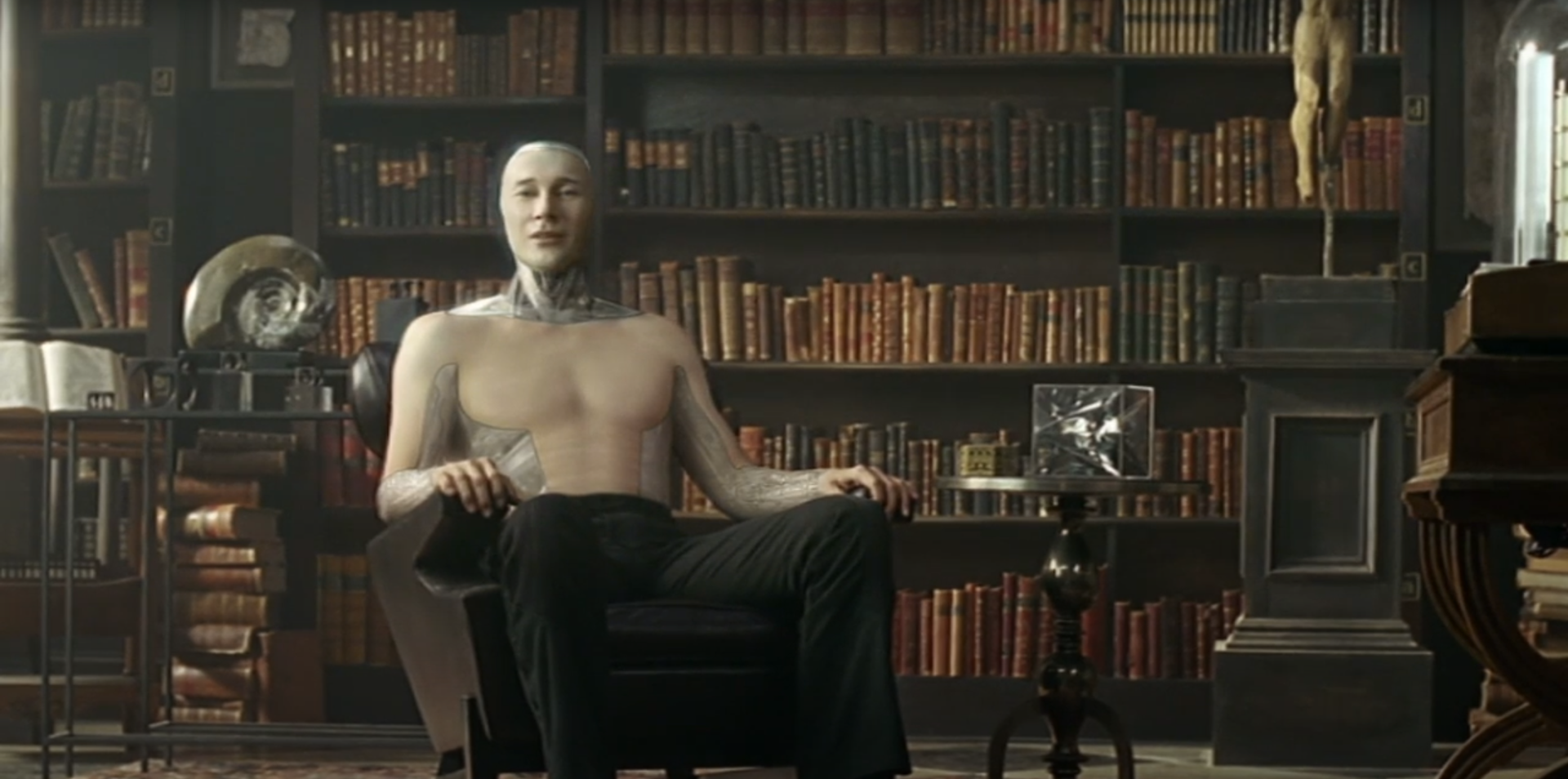
And maybe that’s not a threat, maybe it’s the very definition of progress. I’ll leave you with a timeless ad that reflects our situation with AI perfectly: The Android Who Wants to Be Human.