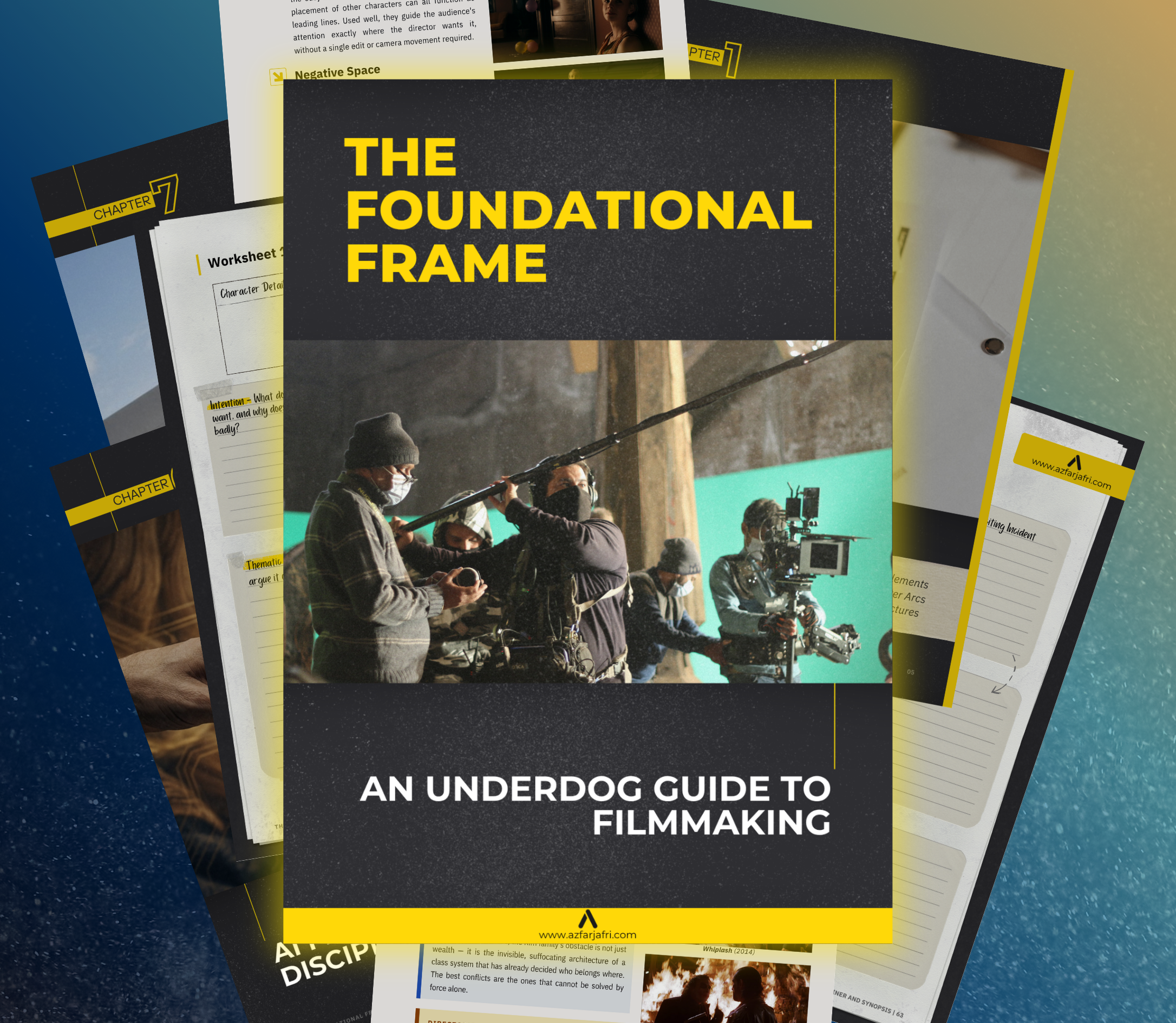
An Underdog Guide to Filmmaking
This guide will not make you a filmmaker. Only making films will do that.
That’s the first line I want you to sit with, because it’s the first line of the book itself. And it tells you exactly what kind of guide this is. Not a shortcut. Not a promise. A map, from the first spark of a story idea to the final exported file. So that when you step onto a set, open an editing timeline, or type your first AI prompt, you’re not guessing.
I wrote it for the artistic ones. The people who feel a story before they can explain it. Who’ve been told somewhere along the way that they’re “not technical enough” to direct, shoot, or edit. That’s a myth. Craft is learnable. Instinct isn’t. If you’ve got the instinct, this book is the corner of the thread.
The Chapters
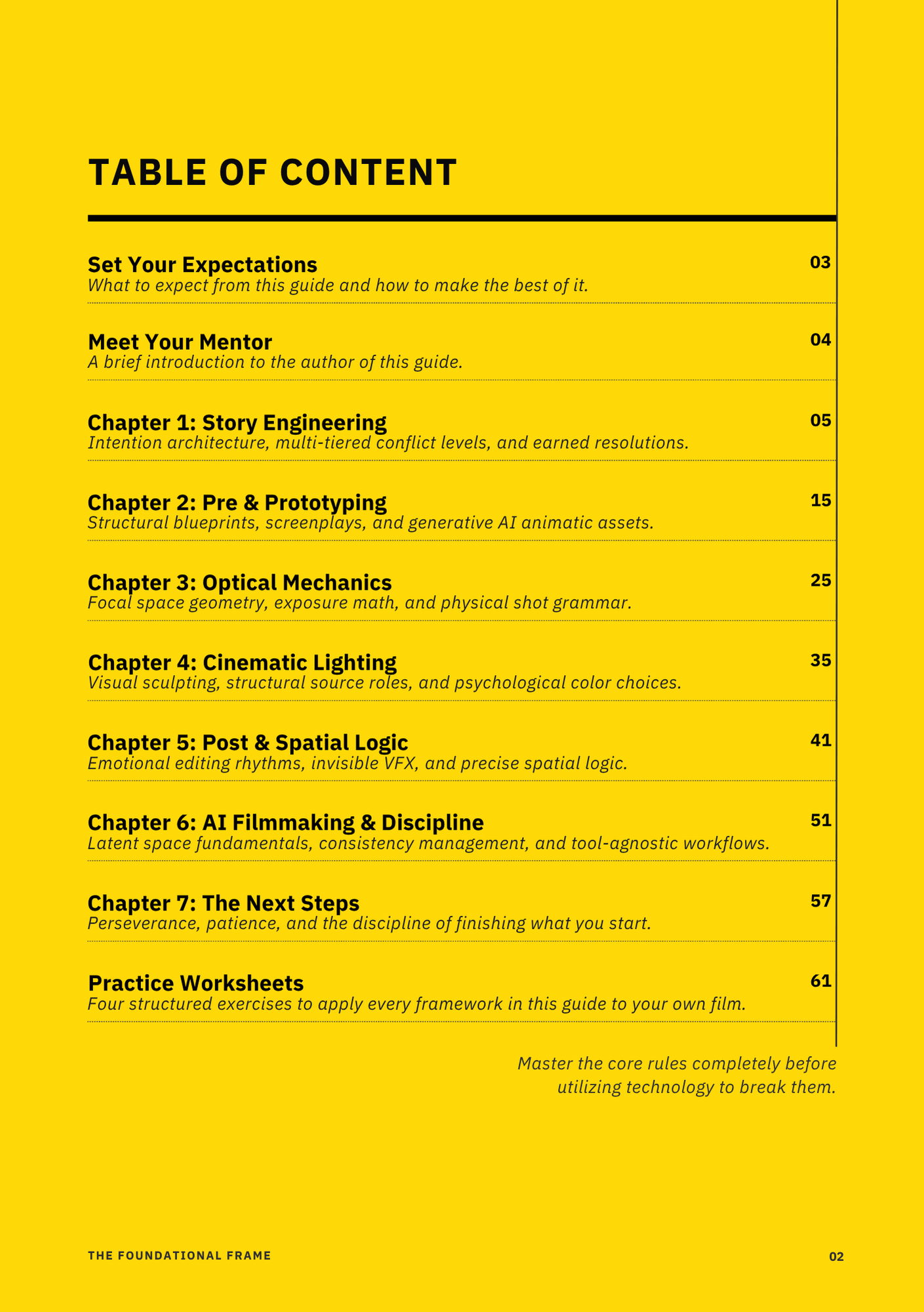
It starts where everything should start, with story. Chapter 1 breaks story down to three working parts: Intention, Conflict, Resolve. Not theory for theory’s sake, I walk through Simba, Andrew from Whiplash, Batman, the Kim family from Parasite, showing how each of their goals, obstacles, and hard-won lessons are built. Then act structure, not as a template, but as an inheritance from Aristotle to Freytag to the screen, and why Act 2 is where most films actually live or die.
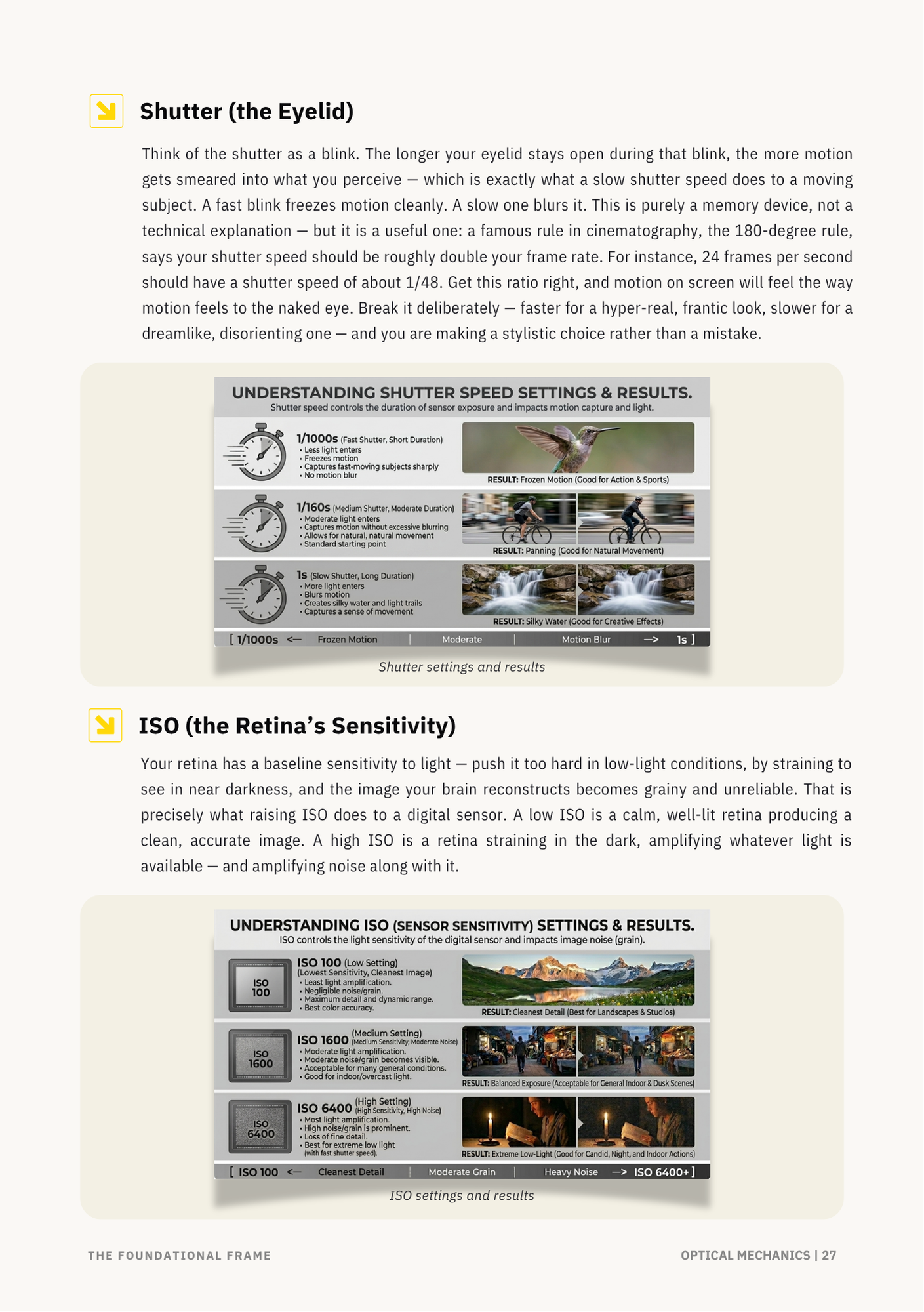
Chapter 2 turns that story into a blueprint, structure, screenplay, and yes, generative AI animatic assets, used the way a sketch is used before a painting. Chapters 3 and 4 are where instinct meets the camera: optical mechanics, focal geometry, exposure, then light as sculpture, as psychology, as the thing that moves an audience’s heartbeat before they know why.
Chapter 5 covers the invisible work, editing rhythm built on emotion, VFX that never announces itself, spatial logic that keeps an audience oriented without them noticing you did it.
Chapter 6 is where I get specific about this exact moment. I break down what a generative model is actually doing, the idea of a “latent space,” why a vague prompt gives you a vague result, why AI has quietly been part of filmmaking pipelines for years before anyone called it that. And I say this plainly in the book: AI is not a shortcut around learning craft. It rewards craft more visibly, and punishes the lack of it more obviously, than almost any tool that came before it. The chapters before it aren’t optional context, they’re what turns AI from a slot machine into an instrument.
Chapter 7 closes the way any real mentor closes, not with more technique, but with the one skill no guide can teach: perseverance. Endurance to finish. Resilience to fail without resentment. Patience to trust the compounding effect of unglamorous, consistent work. And a final word on tools: by the time you read this, half the tools mentioned may already be replaced. That’s fine. Principles don’t expire the way software does.
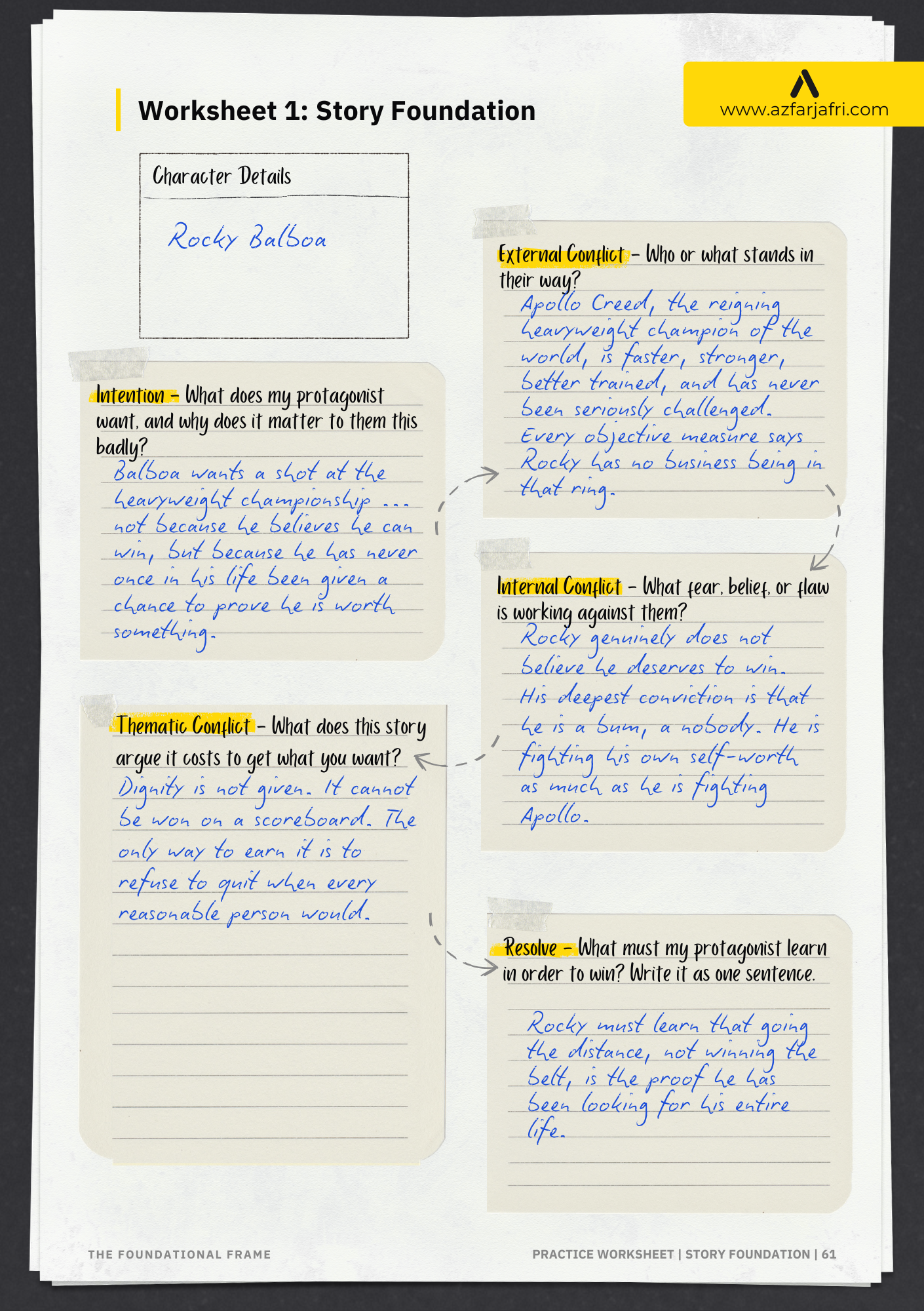
Then four Practice Worksheets, because reading a foundation isn’t the same as pouring one.
The whole book runs on one line I keep coming back to: Master the core rules completely before utilizing technology to break them.
That’s the corner of the thread. Pull it.