

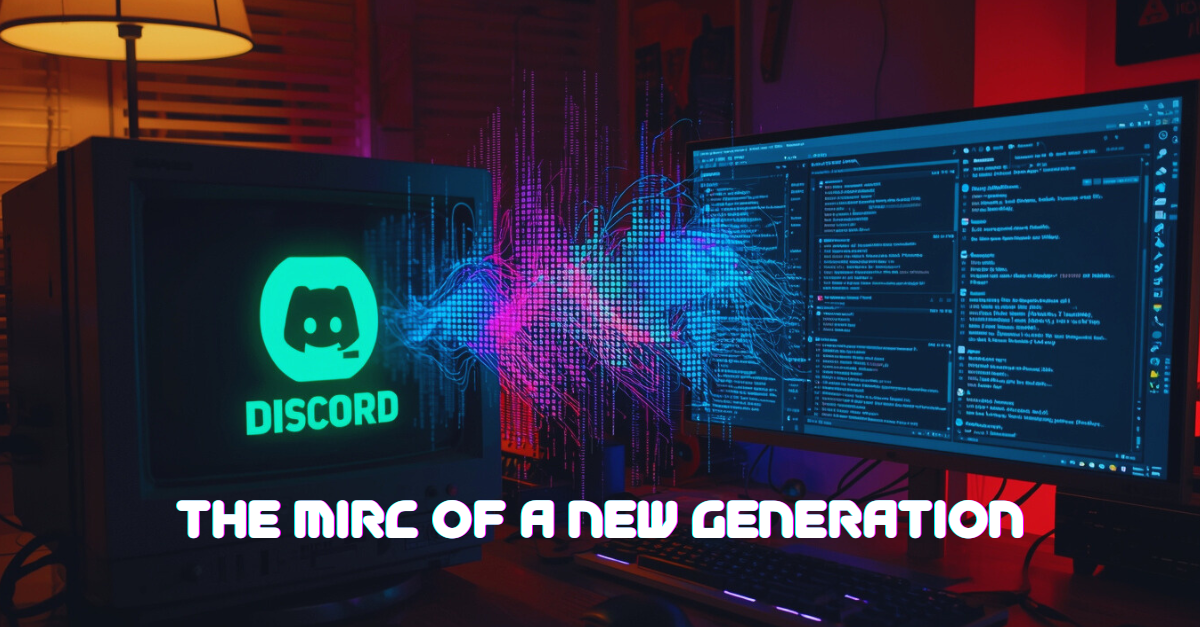
Every time I open Discord, I’m transported back to the early 2000s, sitting in front of a chunky monitor, the distinctive ping of mIRC echoing through my room. For those of us who grew up in IRC (Internet Relay Chat) channels, Discord feels like a homecoming, but with better graphics, voice chat, and a generation of users who’ve never heard of /whois commands or messages like “asl?”.
From IRC Channels to Discord Servers
In the early 2000s, mIRC was where communities thrived. You’d connect to servers, join channels with names like #gamers or #writing, and suddenly you were part of something. Conversations scrolled by in real-time, friendships formed across continents, and moderators (ops) kept the chaos in check with kick and ban commands. It was raw, text-based, and gloriously nerdy.
Discord carries that same DNA, but evolved for the modern era. Instead of channels, we have servers. Instead of pure text, we have voice channels, screen sharing, and emoji reactions. But the core experience remains: curated communities where people gather around shared interests, identities, or goals.
What Exactly Is Discord?
For the uninitiated, Discord is a free communication platform originally designed for gamers but now used by communities of all kinds. Users join “servers” (community spaces) where they can participate in text channels, voice channels, and video calls. Think of it as a hybrid between old-school IRC, Slack, and Zoom, but more casual and community-focused.
The Benefits: Building Real Communities
I’ve witnessed Discord’s power firsthand through my work with students and running the Underdog, an online community I’ve recently started. Here’s what makes it valuable:
Accessibility and Ease of Use: Unlike mIRC’s arcane commands and server configurations, Discord is intuitive. Students who’ve never used community platforms can jump in within minutes. The barrier to entry is remarkably low.
Rich Communication Options: Text channels keep conversations organized by topic. Voice channels allow spontaneous discussions without the formality of scheduling a Zoom call. Screen sharing enables collaborative work, tutoring sessions, and presentations.
Community Building: The Underdog has shown me how Discord facilitates genuine connections. Members support each other’s projects, celebrate wins, and provide feedback in ways that feel more authentic than traditional social media. There’s a sense of belonging that emerges when people share a dedicated space.
Educational Applications: With my students, Discord has become an extension of the classroom. Study groups form organically, questions get answered outside of office hours, and quieter students who might not speak up in class find their voice in text channels.
Customization and Control: Server owners can create intricate permission structures, custom roles, and automated moderation through bots. This flexibility allows communities to shape their spaces precisely to their needs.
The Dangers: What Hasn’t Changed Since mIRC
Here’s the thing about Discord that mirrors the mIRC days: the same features that make it powerful also make it potentially dangerous, especially for younger users.
Privacy Concerns: Just like in mIRC days, not everyone online is who they claim to be. Discord’s direct messaging feature means strangers can contact users, particularly minors. The platform’s anonymity can be both a feature and a vulnerability.
Moderation Challenges: Server moderation requires constant vigilance. Toxic behavior, harassment, and inappropriate content can proliferate in under-moderated spaces. I’ve followed expert advice for establishing clear community guidelines for the Underdog and engaging a moderator, work that’s invisible to members but essential.
Echo Chambers and Radicalization: Discord’s private nature means servers can become echo chambers. Unlike public social media, there’s little outside visibility into what’s being discussed. This has made Discord attractive to extremist groups, though it’s far from the only platform with this problem.
Screen Time and Addiction: The always-on nature of Discord, combined with notification pings and FOMO (fear of missing out), can lead to compulsive checking and excessive screen time. I’ve seen students struggle to disconnect, feeling obligated to be constantly present in their Discord communities.
Data and Digital Footprint: Every message, image, and voice clip is stored on Discord’s servers. Young users especially may not consider the permanence of their digital conversations.
Using Discord Responsibly
Based on my experiences running the Underdog and working with students, here are some practices I’ve found essential:
Clear Community Guidelines: Establish explicit rules about behavior, privacy, and respect. Pin them where everyone can see them.
Active Moderation: Invest time in training moderators and responding quickly to issues. The mIRC philosophy of “ops keep channels safe” still applies.
Privacy Education: Teach users (especially younger ones) about protecting personal information, recognizing manipulation tactics, and reporting concerning behavior.
Healthy Boundaries: Encourage taking breaks, muting notifications during certain hours, and remembering that Discord is a supplement to, not a replacement for, in-person connection.
Age-Appropriate Spaces: Discord requires users to be 13+, but enforcement relies heavily on honesty. For educational contexts with minors, consider whether Discord is appropriate or if alternatives might be better.
The Verdict
Discord isn’t perfect. Like mIRC before it, it’s a tool, one that reflects both the best and worst of human interaction. The friendships I’ve seen form in the Underdog, the support networks my students have built, and the creative collaborations that have emerged all speak to Discord’s potential for good.
But it requires intention. The Wild West days of IRC taught us that online communities need structure, moderation, and care to thrive. Discord is no different.
For educators, community leaders, and anyone bringing people together online: Discord can be powerful, but approach it with eyes open. Set boundaries, educate members, and remember that behind every avatar is a real person deserving of respect and safety.
As someone who’s gone from typing /join #writing in mIRC to clicking the Underdog server icon, I can say this: the platforms change, the graphics improve, but the fundamental truth remains the same. Online communities are what we make them. Choose wisely.