
Blending Game Logic into the Filmmaking Process
I’ve always been a gamer – never hardcore, never purely casual. My favorite games are the ones with depth: a layer of strategy, a demand for careful management, and, most importantly, a story hook strong enough to pull me toward the end goal. For years, I played them for entertainment, challenge, and sometimes even escape. But recently, my perspective has shifted.
Working on my own game has completely redefined how I see this medium. I’ve poured a lot of my filmmaking knowledge into its design, but what surprised me the most is how much games, in return, have to teach filmmakers.
Filmmaking has always drawn from other art forms, staging and performance from theater, framing and light from photography, and narrative structure from literature. Maybe it’s been borrowing from video games all along, and I just hadn’t realized it.
Games are complex systems of rules, choices, and consequences. They engage audiences by letting them participate in it. And for filmmakers, there’s a lot to learn here. By adopting aspects of game logic, directors can unlock new ways of building tension, designing worlds, and drawing audiences deeper into the emotional core of a story.
Cause-and-Effect Systems
Traditional films usually move in a straight line: Scene-A leads to Scene-B, which leads to Scene-C. Games, on the other hand, thrive on branching pathways. Even if the story is ultimately linear, the illusion of agency keeps players invested.
Filmmakers can borrow this principle by emphasizing cause-and-effect storytelling. Characters’ choices should ripple outward, reshaping not just what happens next, but how the world reacts around them.
Thinking Like a Level Designer
Game designers treat environments as more than backdrops, they’re active storytelling tools. A dark corridor or a glowing safe zone, doesn’t just decorate the world, it sets pacing, mood, and even choice architecture.
Filmmakers can apply this by designing sets and locations with the same mindset. Just like games rely on believable rules, films can create immersive atmospheres by ensuring every space feels lived-in, with histories and cultures implied in the smallest details.
Think of the way a game gradually ramps up tension as you move from open safe areas into claustrophobic danger zones. That rhythm can be mirrored in scene sequencing, production design, or even camera movement.
Showing Consequences in Real Time
One of the most powerful aspects of game logic is the feedback loop, the system that shows players how their actions matter, like the health bars, environment changes and NPC reactions.
Cinema can’t display HUDs, but it can adopt the same logic. If a character betrays someone, the film can immediately show the trust eroding in the group dynamic. If they make a reckless choice, the environment can respond subtly, like weather, sound or crowd behavior.
These feedback systems deepen immersion by constantly reminding the audience that the story reacts to itself.
Branching Emotion
Not every game-inspired idea needs to be about choice of action. Some of the most powerful mechanics are about how emotions can branch.
In games, the same mission can feel hopeful or tragic depending on how you played leading up to it. In films, the emotional lens of a scene can shift based on what the audience already knows or suspects, a directorial technique that mirrors the branching emotional states games rely on.
This allows films to feel layered, where each choice builds not just events, but emotional contexts that shape the viewer’s experience.
Collaboration Between Mediums
The real promise of blending film and game logic isn’t about making interactive films (something Hollywood has already tried with mixed results). Instead, it’s about filmmakers absorbing game design thinking into their craft.
Directors can think like system designers, where story events interlock like gears instead of dominoes. Production designers can approach sets like levels, where every detail implies culture, history, or potential action. Editors can pace films with the rhythm of gameplay loops, alternating tension, release, and reward.
By bringing these mediums closer together, storytellers aren’t just making better films, they’re making stories that feel alive.
Conclusion
Games changed storytelling by putting the audience inside the system. Films can never fully replicate that, but they can learn from it. By integrating game logic into filmmaking, directors have the chance to create narratives that are not only visually stunning but systemically engaging, where every choice, space, and consequence carries weight.
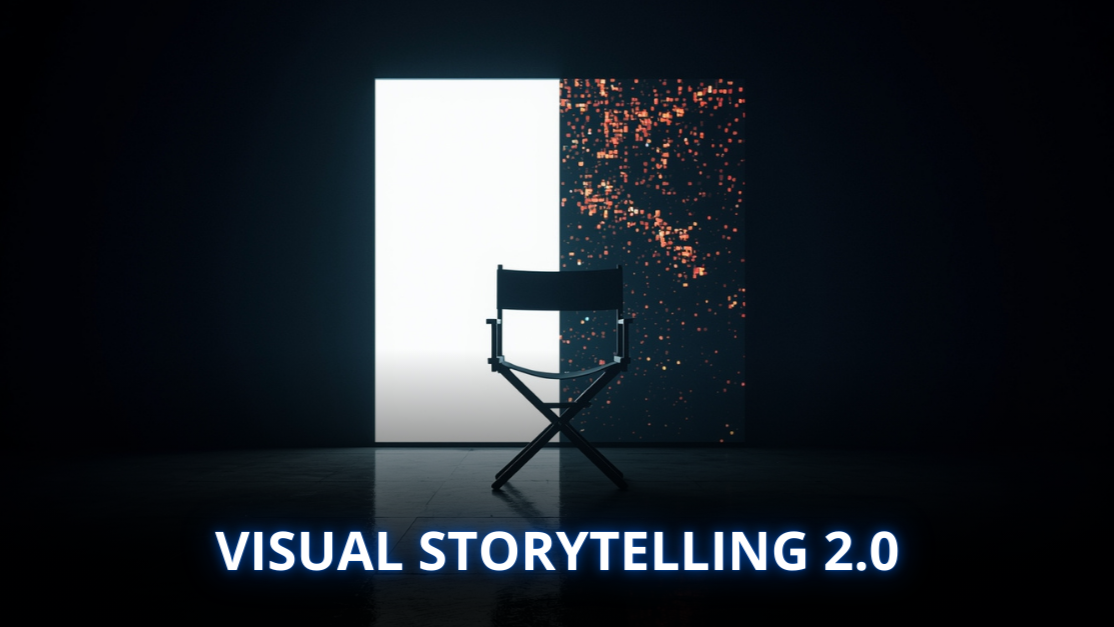
This is what we’re calling Visual Storytelling 2.0: cinema that doesn’t just unfold, but evolves, borrowing from the interactivity of games to make films that resonate more deeply, feel more immersive, and leave a lasting emotional impact.